AI RPG generator for playable story worlds
Create a world, make a hero, and play a campaign that responds to your decisions. aiga_ combines story events, open chat, lightweight stats, persistent world state, and optional scene art in one AI RPG generator.
Start a solo AI RPG campaign or invite friends. If you want a broader story experience, compare the AI adventure generator.
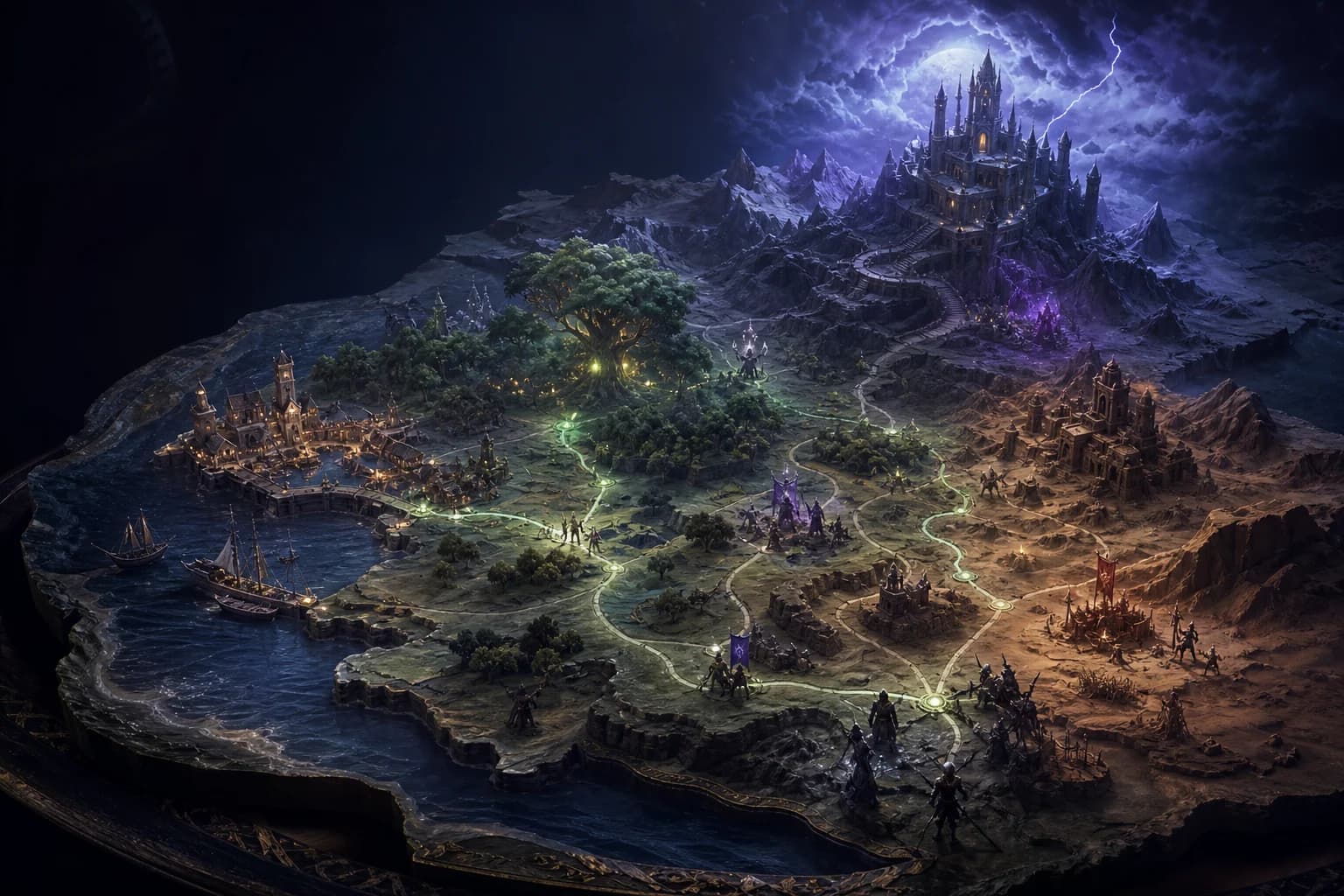
World: choose a genre, tone, conflict, locations, and factions.
Hero: create the role you will play, with traits and lightweight stats suited to the setting.
Campaign: enter the first event, choose an option or type another action, and let the result shape what follows.
What is an AI RPG generator?
An AI RPG generator turns a setting and player role into an ongoing game. Instead of producing one block of prose, it creates scenes, choices, characters, locations, and consequences that can carry into later sessions. If the blank page is the hard part, start with one of these 12 playable AI RPG prompts.
From a world idea to a playable campaign
- World: choose a genre, tone, conflict, locations, and factions.
- Hero: create the role you will play, with traits and lightweight stats suited to the setting.
- Campaign: enter the first event, choose an option or type another action, and let the result shape what follows.
The setup is short. You provide the direction, then play inside the world rather than writing every branch yourself.
Example: turn one premise into an RPG session
Imagine a storm-walled fantasy city that survives by harvesting lightning. You play a disgraced courier carrying a stolen map while two factions compete for the final skyship. aiga_ can turn that premise into city districts, a storm observatory, skyship docks, faction leaders, and an opening checkpoint. You might surrender the map, bluff the guards, or type a different plan. This is an illustrative example, not a promise that every generated campaign follows the same structure.
A playable RPG is not a static story output
A static story generator gives you text to read or edit. A playable RPG keeps a session open: your choice changes the next event, open chat lets you try an unlisted action, and the world records useful consequences for later play.
Fantasy and other RPG genres
Fantasy is a natural fit, but the same structure works for science fiction, horror, mystery, modern drama, and custom settings. Genre shapes the world, characters, risks, and visual direction without locking every campaign to swords and sorcery.
Play solo or invite a group
A solo player can continue at any time without finding a human dungeon master. Group campaigns let friends enter the same world and make decisions together. Browse Shared Worlds if you would rather begin with a published setting.
Persistent memory, with honest limits
aiga_ stores campaign context such as characters, relationships, locations, factions, and prior events so play is more durable than a generic chat transcript. It is narrative-first, not a strict D&D rules engine, and lightweight mechanics will not reproduce every tabletop rule. Generative systems can occasionally miss a detail. Scene images are optional, use credits, and take time to generate.
See how persistent AI RPG memory works, learn to build a playable AI RPG world, follow the story-prompt-to-session walkthrough, or compare an AI RPG with images experience.
Frequently asked questions
Does it generate a playable RPG or only story text?
It generates a playable session with story events, choices, open actions, characters, and persistent campaign context. It is not limited to a single block of generated prose.
Is the AI RPG generator limited to fantasy?
No. You can create science fiction, horror, mystery, modern, and custom settings as well as fantasy worlds.
Can I play solo without a human dungeon master?
Yes. You can create a hero and play through the campaign alone, returning to the same session later.
Can friends join the same campaign?
Yes. You can invite other players into a shared campaign and make decisions together.
What does aiga_ remember between sessions?
It can carry forward relevant world and campaign state, including characters, relationships, locations, factions, and earlier events. Generative systems can still occasionally miss a detail.
Is it a strict D&D or tabletop rules engine?
No. aiga_ is narrative-first and uses lightweight mechanics. It does not enforce every tabletop rule. Optional scene images use credits and take additional generation time.